Sydney Tea Tour - first stop
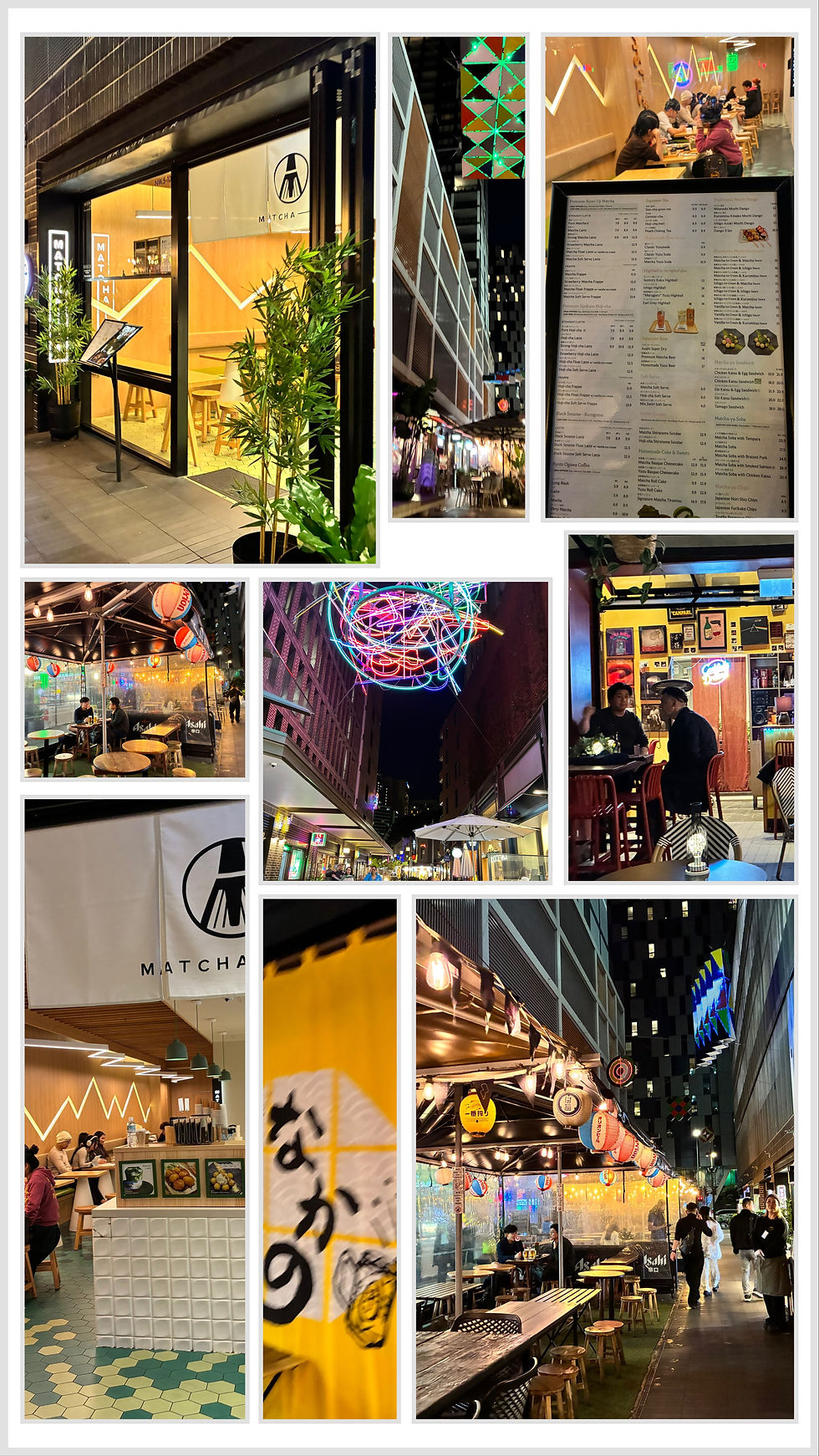
MATCHA-YA, an authentic Japanese café and dessert spot located at Darling Square (Steam Mill Lane) in Haymarket, Sydney.
Even the interior design pays homage to their core ingredient: the green hexagonal floor tiles emulate the look of dissolving matcha, and the distinctive zigzag lighting running down the length of the space mimics the mountainous Japanese landscapes where their tea leaves are grown.
Here is how they source their tea and what they offer:
How They Source Their Tea
Regional Sourcing: MATCHA-YA uses 100% pure, premium Japanese matcha primarily selected from Uji, Kyoto—one of Japan’s most historically prestigious tea-producing regions known for its rich microclimate, deep umami flavors, and vibrant green profile.Direct Auctions & Production: Their foundational manufacturing partner is based in Shizuoka, Japan. Representatives attend traditional Japanese tea auctions four times a year to bid on and secure the highest quality harvest lots, ensuring their custom blend maintains a smooth, creamy texture and high antioxidant content with minimal bitterness.
Aromatic Tea & Beverage Offerings
Beyond traditional espresso-style lattes, they emphasize a highly sensory, fragrant tea menu:
Flavored & Infused Matcha: Creative combinations like Fresh Juice with Matcha or specialty lattes that play with unexpected sweet, strong, or subtly spiced flavor notes.
Loose Leaf & Traditional Teas:
Genmaicha: A gentle, comforting green tea blended with roasted popped brown rice that releases a warm, intensely nutty, and savory aroma.
Hojicha: A heavily roasted green tea that exchanges typical grassy notes for a deeply fragrant, smoky aroma and a clean, naturally sweet finish.
Sencha: A classic, well-balanced green tea with a clean, refreshing astringency and vibrant botanical aroma.
Peach Oolong: An elegant, lighter oolong tea base infused with a highly fruity, sweet peach aroma.
Kyoto Ogawa Coffee: For those wanting a different kind of roast, they serve signature cold brews and floats made from charcoal-roasted, unsweetened beans sourced directly from Kyoto's historic Ogawa Coffee, which delivers an incredibly distinct smoky finish.They pair these with a unique food menu featuring everything from matcha soft-serve sundaes and parfaits to savory
Matcha Udon noodles and curry bowls.
Autogenerated Google AI video directed by me.
Podcast made by Google AI using information I sourced from Google AI
The Essence of Chanoyu (The Japanese Tea Ceremony)
At the heart of Japanese tea tradition is Chanoyu (literally "hot water for tea") or Chado ("The Way of Tea"). Developed over centuries, it is far more than just preparing a beverage; it is a choreographic, meditative art form influenced heavily by Zen Buddhism.
The philosophy of the tea ceremony is anchored in four core principles established by the legendary 16th-century tea master Sen no Rikyu:
Wa (Harmony): Harmony between the host, the guests, the utensils, and the natural world outside the tea room.
Kei (Respect): The mutual respect between all participants, arising from the recognition of shared humanity. In a traditional tea room, the entrance (nijiriguchi) is deliberately low, forcing everyone—even samurai or nobility—to crawl inside as equals.
Sei (Purity): The physical and spiritual cleanliness achieved by washing hands, rinsing mouths, and wiping down the tea utensils before the ceremony begins.
Jaku (Tranquility): A deep, serene peace of mind that naturally emerges once harmony, respect, and purity are attained.
Underlying all of this is the concept of Ichi-go ichi-e—meaning "one time, one meeting." It is the reminder that every single tea gathering is unique and can never be perfectly replicated, urging both host and guest to cherish the fleeting present moment.
Key Japanese Tea Varieties & Terroirs
While all traditional Japanese teas come from the same plant species (Camellia sinensis), the way the plants are cultivated, shaded, harvested, and processed creates vastly different sensory and aromatic profiles.
Unlike Chinese teas, which are often pan-fired, Japanese green teas are primarily steamed immediately after harvesting to arrest oxidation, preserving their bright green color, grassy aromas, and deep umami flavors.
Tea Type | Cultivation & Processing | Sensory Profile |
Matcha (抹茶) | The leaves are heavily shaded for 3–4 weeks before harvest to boost chlorophyll and L-theanine. The veins are removed to create tencha, which is then slow-ground into a fine powder using granite stones. | Intensely vibrant green, thick and creamy mouthfeel, with a potent balance of rich umami, natural sweetness, and a pleasant, lingering bitterness. |
Gyokuro (玉露) | "Jade Dew." Shaded identically to matcha but left as whole leaves, which are rolled and dried with extreme care. | One of the most prized loose-leaf teas; incredibly rich, savory, and full of umami with a distinct marine or seaweed-like aroma. |
Sencha (煎茶) | Grown fully in the sun, harvested early, and steamed. This accounts for the vast majority of tea consumed daily in Japan. | Clean, bright, and refreshing with a grassy, vegetal aroma and a sharp, lively astringency. |
Hojicha (ほうじ茶) | Usually made by taking sencha or bancha (late-harvest) leaves and roasting them over charcoal at a high temperature. | Deeply comforting, warm, and highly aromatic. The roasting process removes almost all bitterness and lowers the caffeine content, yielding smoky, nutty, and toasted-caramel notes. |
Genmaicha (玄米茶) | "Brown Rice Tea." Sencha or bancha blended with toasted, popped whole-grain brown rice. | Highly comforting, sweet, and nutty. The fragrance of the roasted rice softens the grassy notes of the green tea, making it a favorite everyday blend. |
The Visual & Tactile Aesthetics: Wabi-Sabi
The tea tradition is inextricably tied to Wabi-Sabi—the finding of beauty in imperfection, transience, and simplicity.
Rather than flawless, symmetrical porcelain, traditional tea masters prefer rough, asymmetrical, hand-formed earthenware like Raku ware. A tea bowl (chawan) that is slightly cracked, weathered by time, or repaired with gold lacquer (Kintsugi) is considered infinitely more beautiful and spiritually resonant because it carries a story of impermanence and resilience.
Health benefits of matcha
What makes matcha unique compared to regular brewed green tea is that you are consuming the entire tea leaf rather than just the water it steeped in. Because the leaves are ground into a fine powder, you get a highly concentrated dose of water-insoluble nutrients, fiber, and active compounds.
Here is a breakdown of what the science says about the health benefits of matcha:
1. Sustained Cognitive Focus ("Calm Alertness")
Matcha is famous for providing a clean, sustained energy boost without the jittery crash often associated with coffee. This happens because of a unique dual-action combination:
L-Theanine: Matcha contains exceptionally high levels of this amino acid (boosted by the shading process before harvest). L-theanine crosses the blood-brain barrier and increases alpha wave activity in the brain, which promotes deep relaxation, stress reduction, and a calm mind.
Caffeine: Matcha contains a moderate amount of caffeine (roughly 35–70 mg per teaspoon, compared to around 90–100 mg in a cup of coffee).
The Synergy: L-theanine binds with caffeine, slowing down its absorption into your bloodstream. This creates a smooth, time-released state of focused alertness that typically lasts 4 to 6 hours.
2. An Extraordinary Antioxidant Profile
Matcha is incredibly rich in catechins, a class of plant compounds that act as powerful natural antioxidants to stabilize harmful free radicals and protect cells.
The EGCG Powerhouse: It is packed with epigallocatechin gallate (EGCG), which has been extensively studied for its ability to reduce inflammation, support cardiovascular health, and repair cellular damage.
The Scale: Research indicates that matcha contains up to 137 times more EGCG than certain low-quality commercial green teas, and at least 3 times more than standard high-quality loose-leaf green tea.
3. Metabolic and Cardiovascular Support
Regular consumption of the catechins found in matcha has been shown to support overall metabolic fitness:
Thermogenesis: Some clinical studies suggest that green tea extract can help increase the body's rate of calorie burning (thermogenesis) and enhance fat oxidation during moderate exercise.
Heart Health: The compounds in matcha help protect blood vessels from oxidative stress, inhibit lipid absorption, and support healthy cholesterol levels (specifically helping lower LDL, or "bad" cholesterol).
4. Immune and Detoxification Support
Because you are ingesting the whole leaf, you benefit from its structural nutrients:
High Chlorophyll Content: The weeks of deliberate shading before harvest force the tea plant to overproduce chlorophyll. While primarily responsible for matcha's vibrant green color, chlorophyll is also rich in vitamins A, C, and E, and supports natural cellular defense mechanisms.
Antimicrobial Properties: The polyphenols in matcha have been shown to inhibit oral bacteria, which can help reduce plaque buildup and support fresher breath.
A Note on Quality and Sourcing
To get the maximum health benefits (and the best flavor profile), it pays to look at how it's categorized:
Ceramic/Ceremonial Grade: Ground from the youngest stone-picked leaves. It has the highest concentration of L-theanine and chlorophyll, giving it a vibrant electric green color and a smooth, sweet, umami flavor. Best for drinking straight with water.
Culinary Grade: Harvested from lower on the tea plant or later in the season. It has a slightly more robust, astringent flavor and a duller green color, but it still retains excellent antioxidant properties and holds up beautifully when blended into lattes, smoothies, or baking.
The "Way of Tea"
Zen philosophy and the principles of Chanoyu (the "Way of Tea") transform the preparation of matcha from a simple task into a choreographic, meditative art form. The ceremony is deeply shaped by the following core concepts and principles:
The Four Pillars of Chanoyu
Established by the 16th-century tea master Sen no Rikyu, four principles serve as the foundation for the ceremony's conduct and atmosphere:
Harmony (Wa): This involves creating a seamless connection between the host, the guests, the utensils used, and the natural world surrounding the tea room.
Respect (Kei): The ceremony emphasizes the shared humanity of all participants. This is physically represented by the nijiriguchi, a deliberately low entrance that requires everyone—regardless of social status—to crawl inside, establishing equality within the tea room.
Purity (Sei): This refers to both physical and spiritual cleanliness. It is enacted through ritualistic acts such as washing hands, rinsing mouths, and carefully wiping down the tea utensils before the ceremony begins.
Tranquility (Jaku): This is the ultimate goal—a deep, serene peace of mind that naturally arises once harmony, respect, and purity have been established.
Zen Philosophical Influences
Beyond the four pillars, several Zen-influenced concepts dictate the aesthetic and spiritual "spirit" of the ceremony:
Ichi-go Ichi-e ("One time, one meeting"): This philosophy reminds participants that every single tea gathering is a unique event that can never be perfectly replicated. It urges both the host and the guest to fully cherish the fleeting present moment.
Wabi-Sabi: The tea tradition is inextricably tied to the finding of beauty in imperfection, transience, and simplicity. Rather than using flawless porcelain, tea masters often prefer rough, asymmetrical earthenware like Raku ware. An item that is weathered or repaired with gold lacquer (Kintsugi) is considered more spiritually resonant because it tells a story of resilience and impermanence.
Meditative Focus: The ceremony acts as a "calm alertness" practice. This state of mind is supported by the biology of the tea itself; the high levels of L-theanine in ceremonial matcha promote deep relaxation and alpha wave activity in the brain, allowing for a focused, meditative state without the jitters of caffeine.
In essence, these principles ensure that the tea ceremony is not just about drinking a beverage, but about achieving a state of mindfulness and spiritual connection through a highly structured and symbolic ritual.
Based on the sources, the traditional tea ceremony, or Chanoyu, utilizes a variety of tools and structural elements that are both functional and deeply symbolic.
Primary Utensils
Chawan (Tea Bowl): This is the most prominent tool mentioned. In keeping with the aesthetic of Wabi-Sabi, tea masters often prefer rough, asymmetrical, hand-formed earthenware, such as Raku ware, over flawless porcelain. A chawan that shows signs of age or has been repaired with gold lacquer (Kintsugi) is particularly valued for the story of resilience and impermanence it tells.
General Tea Utensils: While the sources do not list every individual tool by name (such as the whisk or scoop), they emphasize that the collection of utensils is central to the ritual of Sei (Purity). Before the ceremony begins, the host ritualistically wipes down these utensils to achieve both physical and spiritual cleanliness.
Production Tools
Granite Stones: Although used prior to the ceremony itself, these are the essential tools for creating the matcha. High-quality tencha (leaves with veins removed) is slow-ground into a fine, vibrant green powder using these stones.
Symbolic Architectural Elements
Nijiriguchi (Crawl-in Entrance): While not a hand-held tool, this architectural feature is a critical "instrument" of the ceremony’s philosophy. It is a deliberately low door that forces all guests to crawl inside, effectively stripping them of social rank (like samurai or nobility) and establishing equality and Kei (Respect) among all participants.
These tools and elements are designed to foster a connection between the host, the guests, and the natural world, ultimately leading to a state of Jaku (Tranquility).
All photos and editing by me.
Information from Google AI

Comments